
With the growing concern for electronic waste (e-waste), the Government of India has made EPR Authorization mandatory under the E-Waste Management Rules. Importers of electronic goods cannot clear consignments from customs without valid EPR approval from the Central Pollution Control Board (CPCB).
What is EPR Authorization?
EPR (Extended Producer Responsibility) is a legal responsibility imposed on producers, importers, and brand owners (PIBOs) to ensure the collection, recycling, and environmentally safe disposal of electronic waste.
Why Importers Need EPR Before Importing Electronics
-
Customs Clearance Requirement: Consignments will be held without EPR approval.
-
Legal Compliance: Non-compliance can attract penalties, confiscation, or blacklisting.
-
Sustainability Obligation: Demonstrates compliance with India’s global commitments.
Steps to Obtain EPR for Electronics Import:
-
Prepare Documentation – IEC code, company incorporation, GST, product details.
-
File Application with CPCB.
-
Submit Waste Collection & Disposal Plan.
-
Obtain Authorization.
Consequences of Importing Without EPR
-
Customs seizure of goods.
-
Heavy fines under the Environment Protection Act.
-
Loss of reputation with clients and regulators.
Conclusion
If you are planning to import electronics into India, securing EPR Authorization is not optional—it is mandatory for customs clearance. Getting it in advance ensures smooth logistics and avoids unnecessary penalties.
Blog 2: Importing Batteries into India? Why EPR Certificate is Non-Negotiable
Introduction
The Battery Waste Management Rules, 2022 make it mandatory for importers of primary and secondary batteries (including lithium-ion, lead-acid, and others) to obtain EPR Authorization. Without this compliance, importers risk customs detention and financial losses.
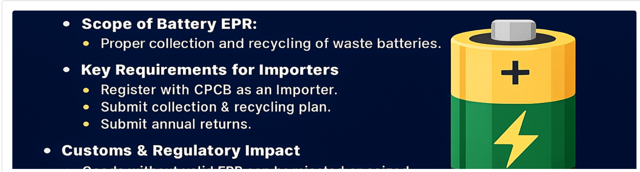
Scope of Battery EPR
Any business importing batteries or equipment containing batteries must ensure proper collection and recycling of waste batteries.
Key Requirements for Importers
-
Register with CPCB as an Importer.
-
Provide a collection & recycling plan proportional to your import volume.
-
Submit annual returns on waste battery management.
Customs & Regulatory Impact
-
Customs officials check EPR Authorization before clearance.
-
Goods without valid EPR are liable for rejection or seizure.
Documents Needed for EPR Authorization of Batteries
-
Importer Exporter Code (IEC).
-
GST & PAN.
-
Details of imported battery types & quantity.
-
Waste management agreement with authorized recyclers.
Conclusion
Battery EPR is a regulatory checkpoint at customs. If you are an importer, ensure EPR authorization is obtained before shipment to avoid detention and losses.